Logo
HOMERESORTSABOUT USPHOTO GALLERYENQUIRYCONTACT US

about bandhavgarh | resorts & activities | tariff & packages | book now | comments


Bandhavgarh National Park and Tiger Reserve, set amongst the Vindhya Hills of Madhya Pradesh, was formed in 1968, with only 105 sq. km. of forest area that was once the private game reserve of the Maharajas of Rewa. In 1986 it was extended to include two large areas of Sal forests adjoining it on the northern and southern sides, taking its total area to 437 sq. km. In the North, a series of ridges are intercut by perennial streams and to the south gently undulating forest is interspersed with grazing areas.

There are 32 hills in the central area of the park, which has a large fort at its center. The fort's cliffs are 800 meters above the sea level and 300 metres above the surrounding countryside. Sal forests cover more than half of the area though in the upper reaches it is replaced by mixed forests of Sali, Daj, Dhobin and Saja.

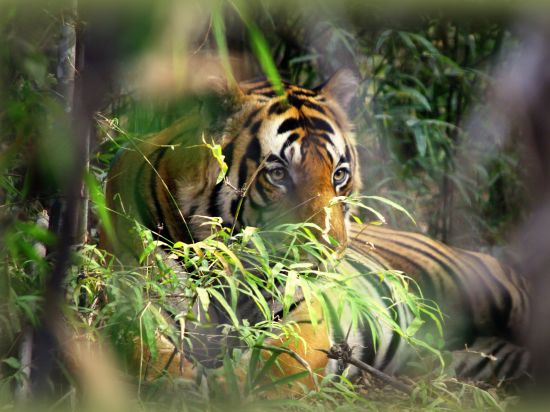
Among these Vindhyan ranges, history and nature meet, as an ancient fort straddles the park. This is the famous tiger country, where the present density of tigers per sq. km. is considered to be one of the highest in the country. These hill ranges cover more than 1200 sq. km. in Umaria district of Madhya Pradesh. This terrain of rocky hills rising sharply from waterlogged grasslands and densely forested valleys is mainly covered with bamboo and Sal trees. The central area of the park covering 105 sq. km. is the principal viewing area open to wildlife enthusiasts.

There are 32 hills in the central area of the park, which has a large fort at its center. The fort's cliffs are 800 meters above the sea level and 300 metres above the surrounding countryside. Sal forests cover more than half of the area though in the upper reaches it is replaced by mixed forests of Sali, Daj, Dhobin and Saja.


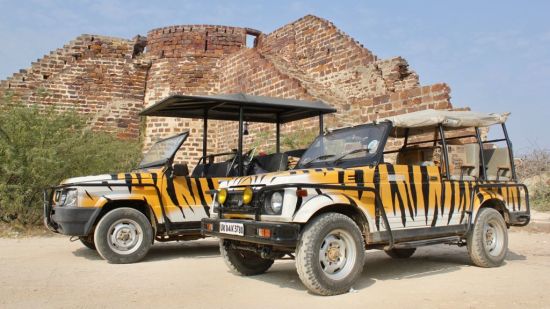
There are several fair weather roads in the park. Four wheeled-drive vehicles are definitely recommended over other vehicles and can be hired. The most effective way to search for tigers and other wildlife is on the elephant back. Domesticated elephants belonging to the Forest Department & equipped with walkie-talkies, can be boarded at an extra price whenever a 'Tiger Show' is on. The mahouts are well informed of the where abouts of the nearest tigers and the elephants are able to take you up the difficult forest terrain and down marshy riverbeds which are impassable to vehicles. Entry into the park is allowed only during daylight hours and you are not allowed into the park on foot. A forest guard must accompany all visitors into the park.

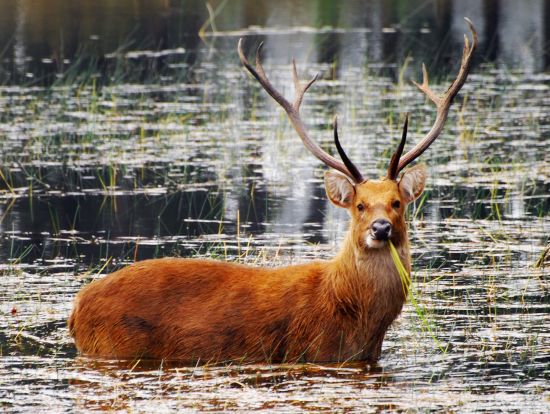
Bandhavgarh is undoubtedly famous for its tigers but it has a wide range of other mammalian species inhabiting the park. Sambar (the largest deer of the Indian subcontinent), Chital or Spotted Deer (the major prey species of tigers & leopards), Muntjac (popularly known as the Barking Deer) and the Chowsingha or Four-horned Antelope are seen in abundance. Nilgai or Blue Bull, which is the largest Asian antelope and Chinkara, the Indian gazelle, are sighted in the open grasslands.

The Leopard though sighted rarely, co-exists with the Tiger. Species like Jungle Cat, Striped Hyena, Jackal, Indian Fox, Wild Boar, Wolf too are sighted frequently. So too are the Sloth Bear, Porcupine, Ratel and the Indian Pangolin. The primates seen in the park are the Rhesus Macque and the Hanuman Langur.


How to Reach

Air: Nearest Airport Jabalpur (164 km) is connected to Delhi via daily flights
Road: Jabalpur (164 km), Khajuraho (280 km), Umaria (32 km), Kanha (325 km)
Rail: Nearest rail heads Umaria (32 km), Katni (102 km), Satna (134 km) & Jabalpur (164 km)

Season

October 15 to June 30 | The resort is open throughout the year

Location

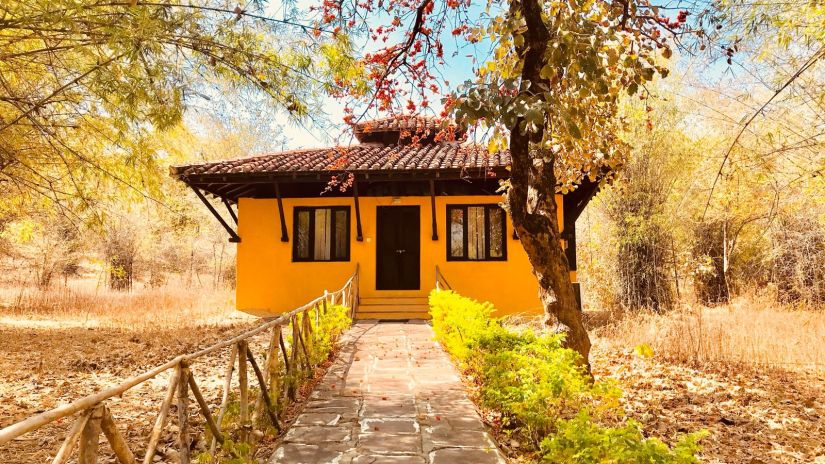
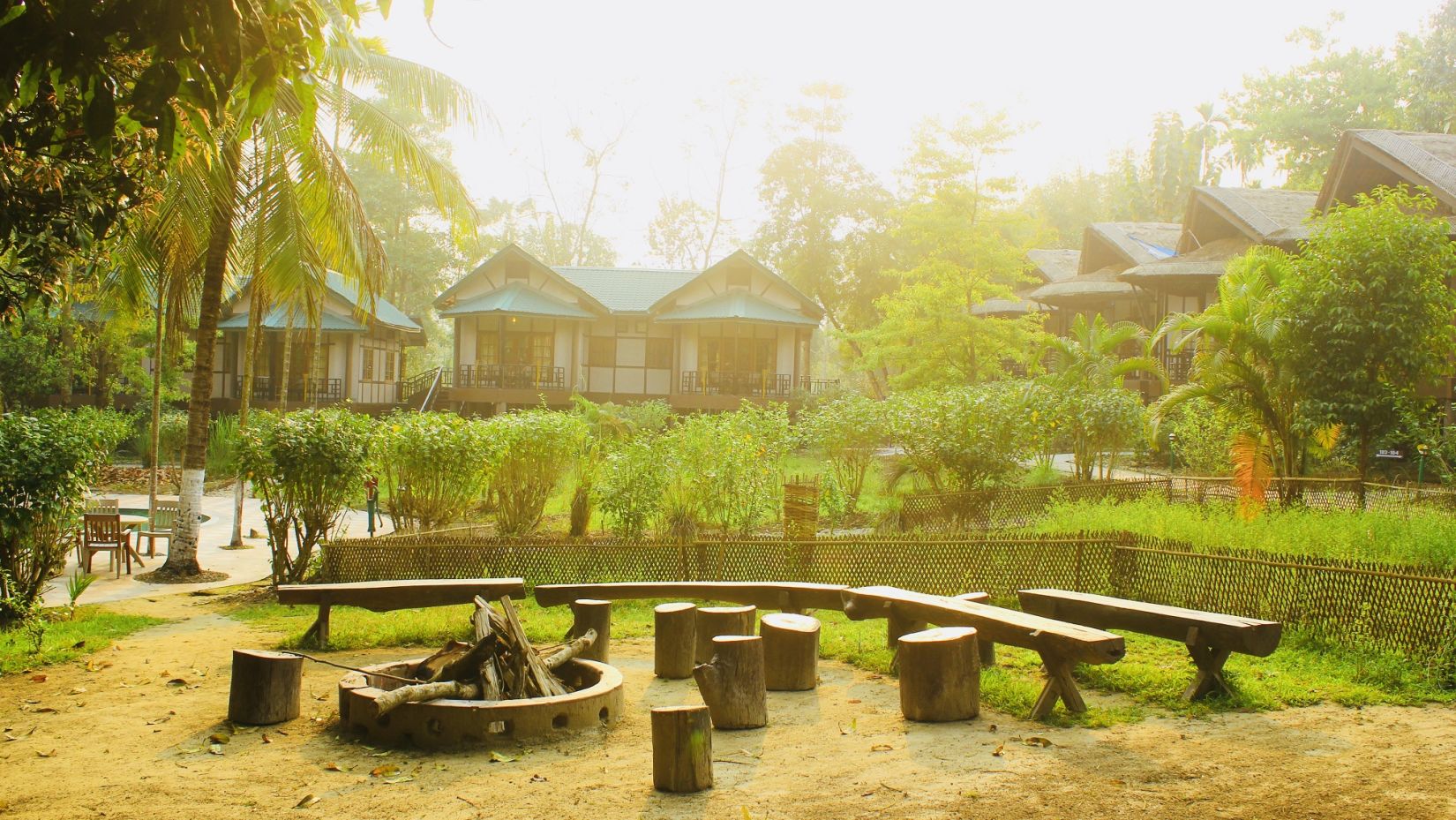
The resort is located 15 minutes away from the Tala entrance gate of the park